
Bus Simulator Ultimate Fuel System Guide Best Saving Strategies
You just finished a long route, and half your profit got swallowed by fuel costs. This is one of the biggest money drains in Bus Simulator Ultimate, and most players never figure out why their earnings stay flat no matter how many routes they grind.
The fuel system in this game is more nuanced than it looks on the surface. Your driving habits, vehicle choice, route timing, and even how you accelerate out of a bus stop all directly impact how much fuel you burn every kilometer. Small tweaks add up to real savings over dozens of routes.
This fuel guide breaks down everything you need to control fuel consumption, cut operating costs, and start seeing real profit growth across your fleet.
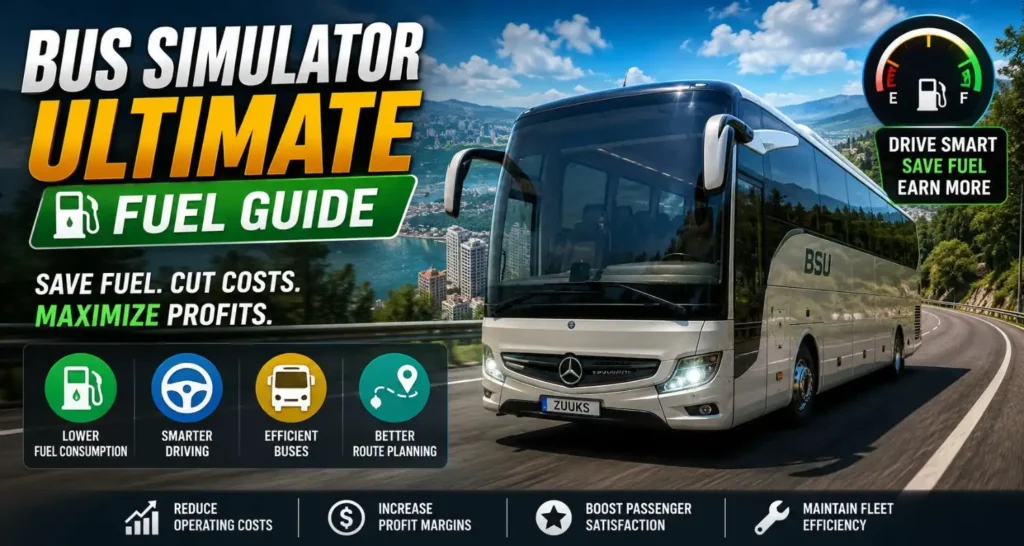
To save fuel in Bus Simulator Ultimate, drive at consistent speeds between 60 and 80 km/h, avoid aggressive acceleration, use newer bus models with better efficiency ratings, and favor shorter highway routes when possible to reduce idle time and total fuel burn per trip.
What Is the Fuel System in Bus Simulator Ultimate?
Bus Simulator Ultimate simulates fuel consumption based on several factors during every route you drive. The game tracks your speed, acceleration, road type, bus weight, and total distance to calculate how much fuel your vehicle burns per kilometer. This means two drivers running the same route can end up with different fuel bills based purely on their driving style.
Your fuel tank capacity depends on the bus model you are operating. Older, cheaper buses tend to have less efficient engines and higher consumption, which cuts into your profit margin on every route. As you upgrade to newer vehicles, fuel cost per kilometer tends to drop noticeably even before you change a single driving habit.
Most players treat fuel as a fixed cost they cannot control, but that thinking costs real coins every session. You have more control over fuel spending than you might think.
Open your route summary after each trip and check the fuel cost line item. Compare it across two or three similar routes to see which ones are quietly draining your budget.
How to Save Fuel in Bus Simulator Ultimate
There is no single trick here. Saving fuel comes down to smart driving, smart vehicle management, and smart route selection working together. The three methods below tackle each angle.
Method 1: Optimize Your Driving Style
This is the highest impact change you can make without spending a single coin. Your throttle input and braking behavior account for a large share of total fuel consumption on every route. Driving like you are late for every stop is one of the fastest ways to drain your tank and your wallet at the same time.
- Maintain a steady speed: Target 60 to 80 km/h on open roads and avoid speed fluctuations. Constant acceleration and deceleration burns more fuel than holding a smooth, consistent pace.
- Ease off the throttle early: When you see a bus stop or signal ahead, lift off the accelerator early and coast toward the stop instead of braking hard at the last second.
- Avoid full throttle takeoffs: After picking up passengers, accelerate gradually from the stop instead of flooring it. A smooth acceleration phase uses noticeably less fuel than a sharp burst of speed.
- Limit idle time: Leaving your bus idling at a stop for extended periods still burns fuel. Minimize unnecessary idle time between routes.
- Use the mini map to anticipate traffic: Scanning ahead for turns, intersections, and stops lets you plan your throttle input in advance, so you are not caught braking suddenly or surging to catch up.
Smooth driving also tends to support better passenger satisfaction, which feeds into tip income, so efficient driving pays off on more than one front.
Method 2: Choose the Right Bus for Every Route
Not every bus in your fleet is equally fuel efficient. Selecting the wrong vehicle for a route type is one of the most overlooked causes of high fuel costs. A heavy bus running a short city loop burns fuel at a rate that can make the trip barely profitable, when a smaller standard bus would do the same job for less.
- Check efficiency ratings before assigning a route: Newer bus models in the showroom display fuel consumption ratings. Compare these before committing a vehicle to a new route.
- Match bus size to passenger demand: Running a large capacity bus on a low traffic route wastes fuel on capacity you are not using. Assign smaller, more efficient buses to shorter or quieter lines.
- Upgrade your fleet progressively: Prioritize fuel efficient mid tier buses early rather than saving indefinitely for a premium vehicle. The fuel savings from a better bus often pay back the purchase faster than expected. See the best buses ranked guide for efficiency comparisons across the fleet.
- Keep your fleet serviced: A bus running with mechanical issues tends to burn more fuel than a well maintained one. Check your fleet status regularly and service buses before problems compound.
- Use AI drivers on the right routes: AI drivers tend to have a less efficient driving style than a skilled human player. For your highest revenue long routes, drive them yourself and let AI handle shorter, lower margin runs where inefficiency costs less. The drivers guide covers route assignment in more detail.
The money guide covers how fleet investment decisions connect to long term profitability beyond fuel savings alone.
Method 3: Pick Fuel Smart Routes and Timings
Route selection is as much a fuel decision as an income decision. A high paying long route with heavy traffic can cost more in fuel than a medium paying, clean highway route you can complete faster and more smoothly. Reading the fuel math behind a route changes how you plan your whole operation.
- Prefer highway heavy routes: City routes with frequent stops and turns force constant acceleration and braking that spikes fuel consumption. Highway segments allow steady cruising that is more efficient per kilometer.
- Avoid peak traffic where possible: Sitting in heavy virtual traffic wastes fuel on idle burn and leads to the stop and go driving that hurts efficiency. Running city routes during lighter traffic periods helps.
- Weigh profit against fuel cost: A route paying somewhat more but burning noticeably more fuel can end up a worse trade overall for your bottom line.
- Consider regional operating costs: Different map regions carry different cost structures. Weigh strong ticket prices against overhead before expanding into a new region.
- Stack shorter routes efficiently: Running two short fuel efficient routes back to back can sometimes outperform one long route once you factor in total fuel cost and completion time.
For a full breakdown of the top earning lines across every region, see the best routes guide.
Common Fuel Errors and How to Fix Them
Even experienced players fall into a handful of repeating fuel mistakes that steadily drain company profits. Recognizing these patterns early saves months of slow progression caused by avoidable overspending.
Fuel costs eating a large share of route revenue: this usually means an oversized or older bus is running a short route. Reassign a smaller, newer model to that line and check the cost difference after the next completed trip.
AI drivers consistently losing money on assigned routes: AI drivers tend to accelerate more aggressively and brake later than a human driver, which raises fuel usage. Audit their assigned routes and either take over the most expensive ones yourself or scale back the AI fleet until your income comfortably supports the inefficiency.
Fuel tank running empty mid route: this usually means you departed without a full tank or the route is longer than your range comfortably supports. Check fuel level before starting a route and refuel at any available station before your tank drops too low.
The same route costing very different amounts between sessions: this is usually a driving consistency issue. Aggressive acceleration on some sessions versus smoother driving on others creates real cost variance. A consistent driving routine helps your per route fuel cost settle at a predictable level.
Do not ignore the maintenance indicator in your fleet manager. A bus flagged for service tends to burn more fuel and accumulate larger repair costs the longer it is delayed. Fixing it early saves on both fronts at once.
Fuel Efficient Driving vs Aggressive Driving: Key Differences
To make the impact of driving style clear, here is a comparison of what efficient driving versus aggressive driving tends to cost per route in Bus Simulator Ultimate.
| Factor | Efficient Driving | Aggressive Driving |
|---|---|---|
| Fuel use per route | Lower | Noticeably higher |
| Passenger satisfaction | Consistently strong | Inconsistent, often lower |
| Tip income per route | Higher | Lower |
| Vehicle wear rate | Slower | Faster |
| Net profit margin | Stronger | Weaker |
| Long term fleet sustainability | Strong | Poor |
Efficient driving is not just about saving fuel. It creates a compounding effect across satisfaction ratings, tip income, maintenance schedules, and overall company growth over time.
Frequently Asked Questions
Q: Why is my fuel consumption so high even on short routes?
Short city routes with frequent stops naturally use more fuel per kilometer because of the constant acceleration and braking involved. Switching to a smaller, newer bus for city routes and practicing smoother acceleration brings those costs down.
Q: Does bus speed affect fuel consumption in Bus Simulator Ultimate?
Yes. Driving well above the 60 to 80 km/h range increases fuel burn faster than it saves time. Staying in that range on open roads is generally the sweet spot for balancing speed and efficiency.
Q: Do AI drivers use more fuel than manual driving?
AI drivers tend to consume noticeably more fuel than a skilled human player, since their acceleration and braking patterns are less refined. On your highest revenue routes, driving manually usually gives you a real fuel cost advantage.
Q: What is the most fuel efficient bus in Bus Simulator Ultimate?
Modern buses in the upper mid tier and premium categories generally offer the strongest fuel efficiency in the game. The best buses ranked guide breaks down efficiency ratings across every model.
Q: How does bus maintenance affect fuel costs?
A poorly maintained bus tends to consume more fuel than a properly serviced one running the same route. Keeping your maintenance bar in good condition matters if you are serious about minimizing operating costs.
Final Tips to Master Fuel Consumption
You now have a full picture of how the fuel system works and how to manage it. The players who grow their companies fastest are not the ones running the most routes. They are the ones running the most efficient routes with the right buses, driven the right way, on the right roads.
Treat every route like a small fuel audit. After completing it, check what you spent and consider which of the three main levers, driving, vehicle, or route, you can tighten further. Small, consistent improvements compound into a real cost advantage over a full career.
- Refuel before your tank drops too low to avoid mid route breakdowns.
- Upgrade to fuel efficient mid tier buses as your first major fleet investment before expanding to new routes or regions.
- Prioritize highway dominant routes over city loops early in your career when margins are tightest.
- Review your post route cost breakdown every few routes to spot which lines are quietly draining profit through high fuel burn.
- Service buses as soon as the maintenance indicator turns yellow rather than waiting for red. Early servicing is consistently cheaper than reactive repairs.
- Drive your highest value routes manually and let AI handle lower stakes lines to get the best fuel efficiency where it matters most financially.
For a full breakdown of how to scale your bus company from a single route to a multi country operation, see the career mode guide.